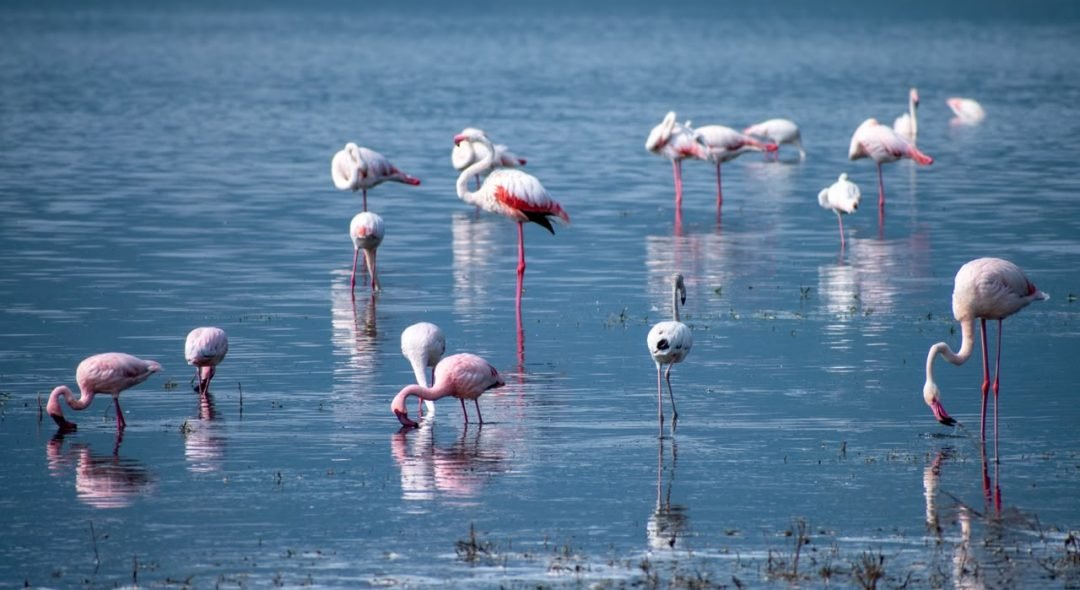
Ngorongoro is one of Tanzania’s most remarkable wildlife destinations, centred around the immense volcanic caldera of Ngorongoro Crater. Formed when a vast volcano collapsed millions of years ago, the crater now shelters a remarkably concentrated ecosystem of grasslands, woodland, wetlands and lakes, creating an exceptional setting for wildlife viewing within a relatively compact area.
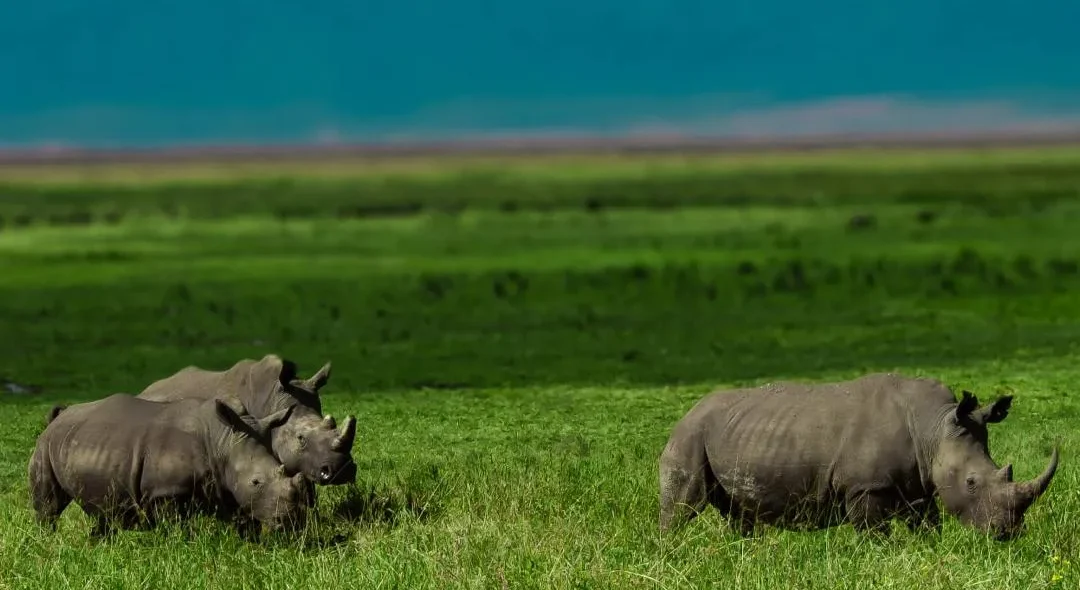
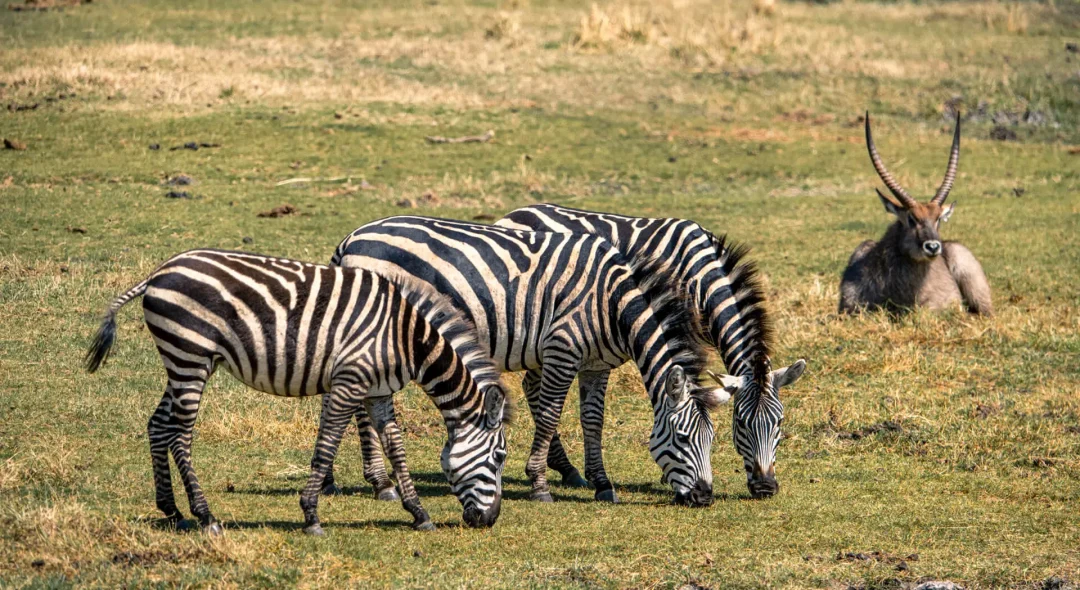
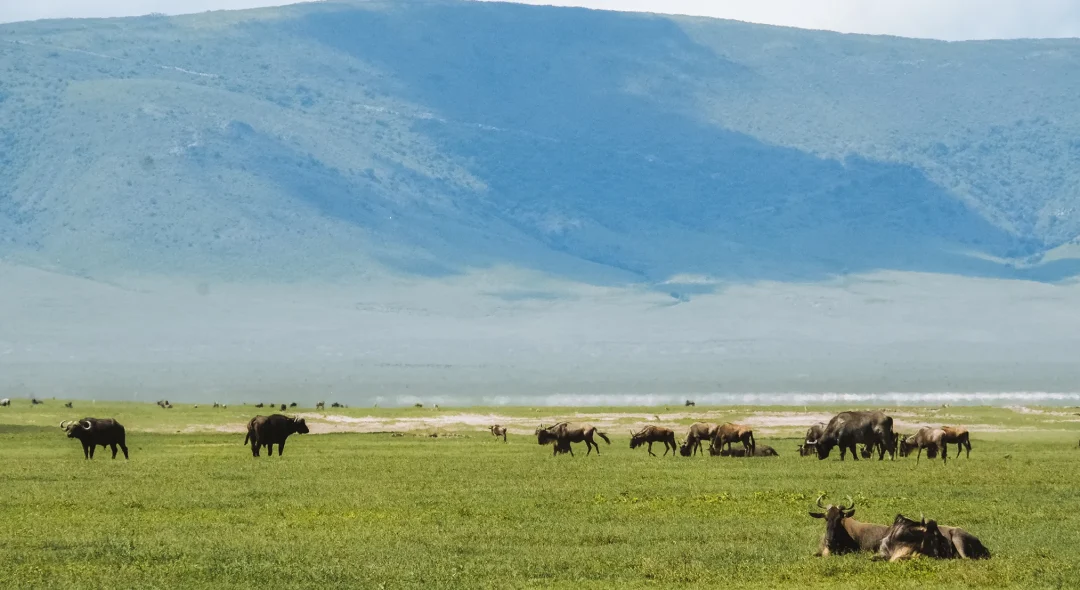
Descending through the crater walls, travellers enter a world of open plains where large herds of zebra, wildebeest and gazelle move across the grasslands alongside buffalo, elephants and hippos. Lions are frequently encountered, while the crater is also one of the places in northern Tanzania where visitors have a realistic opportunity of seeing black rhinoceros. The combination of abundant wildlife and dramatic volcanic scenery makes every game drive feel distinct.
Beyond the crater, the wider Ngorongoro Conservation Area extends across a vast landscape of highland forests, volcanic mountains, grasslands and archaeological sites. It is also home to Maasai communities whose pastoral traditions form an important part of the cultural landscape. The area therefore offers far more than a conventional game-viewing experience, bringing together wildlife, geology, archaeology and living cultural heritage.
One of Ngorongoro’s defining qualities is its sense of enclosure. The crater walls rise around the wildlife-rich floor, creating a natural amphitheatre where the scale of the landscape can be appreciated from viewpoints above before descending into the caldera itself. Early morning game drives can be particularly atmospheric, with mist lingering around the crater rim as the plains below begin to fill with wildlife.
Ngorongoro also sits naturally within the northern Tanzania safari circuit, making it easy to combine with Serengeti, Tarangire, Lake Manyara and other destinations. Whether experienced as part of a longer safari or as a dedicated exploration of the conservation area, Ngorongoro offers an extraordinary encounter with one of Africa’s most distinctive landscapes.