Tanzania Safari Packing List: What to Pack for Your Trip
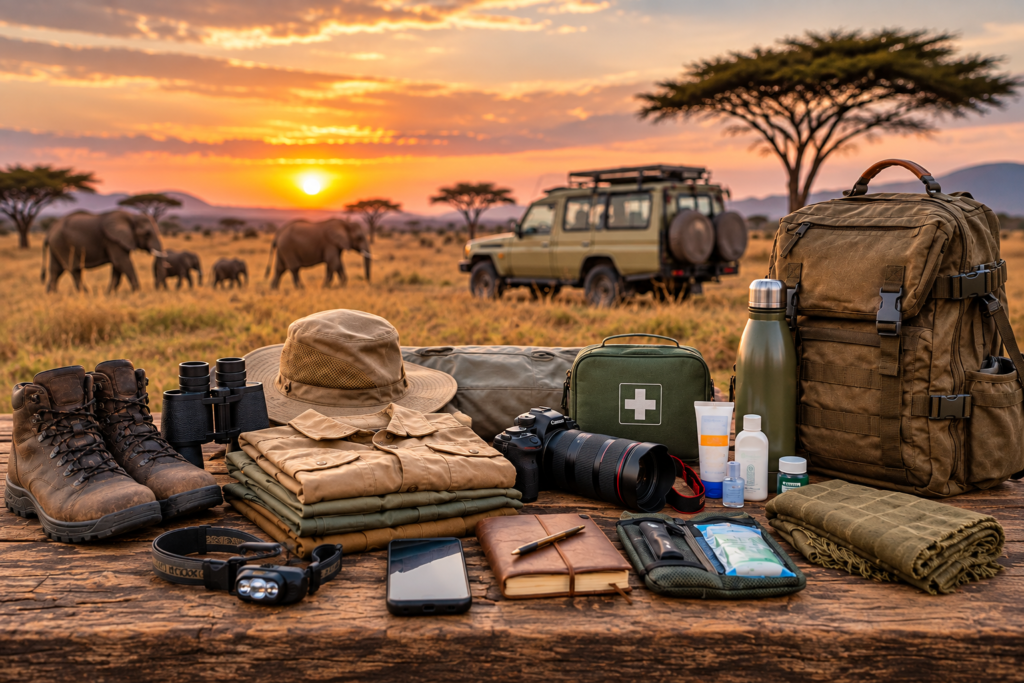
A Tanzania safari is not a trip where you need to pack everything you own. The key is choosing practical, lightweight, and versatile gear that works across changing temperatures, long game drives, and different safari environments.
Mornings can be cool, afternoons can be hot, and evenings in the bush can become surprisingly cold. Your packing list should therefore focus on layers, comfort, and functionality rather than fashion alone.
Whether you are travelling through the Serengeti, exploring Ngorongoro, following the Great Migration, or combining a safari with Zanzibar, the right gear can make the experience considerably more comfortable.
What Clothes Should You Pack for a Tanzania Safari?
The most useful safari wardrobe is one that can adapt throughout the day.
A typical safari day might begin with cool morning temperatures, become warm by midday, and cool again after sunset. Lightweight layers allow you to adjust without carrying excessive clothing.
Consider packing:
- 3–5 lightweight T-shirts or shirts
- 2–3 long-sleeved shirts
- 2–3 pairs of lightweight trousers
- 1 pair of shorts
- Lightweight fleece or sweater
- Warm jacket or insulated layer
- Lightweight waterproof jacket
- Comfortable sleepwear
- Underwear and socks
- Wide-brimmed hat or cap
- Swimwear if your accommodation has a pool
Why Are Long Sleeves Useful on Safari?
Long-sleeved shirts are useful for sun protection, cooler mornings and evenings, and general protection from dust and insects.
Lightweight, breathable fabrics are particularly useful in warmer areas.
Neutral colours such as khaki, beige, olive, and brown are popular because they are practical in dusty environments and less visually distracting around wildlife.
However, you do not need an entirely khaki wardrobe. Comfort and suitability for the climate matter more than matching the traditional safari aesthetic.
What Shoes Should You Pack for a Tanzania Safari?
You generally do not need heavy hiking boots for a conventional vehicle-based safari.
For most safari itineraries, consider bringing:
Comfortable Walking Shoes
Useful for walking around camps, airports, lodges, and other accommodation areas.
Lightweight Hiking Shoes or Boots
Recommended if your itinerary includes walking safaris, nature walks, or uneven terrain.
Sandals
Useful around camp, at the lodge, or when relaxing after a game drive.
If you are climbing Mount Kilimanjaro, your footwear requirements are completely different. A proper mountain boot and trekking system will be necessary.
What Sun Protection Do You Need on Safari?
The Tanzanian sun can be intense, particularly during long hours outdoors.
Pack:
- High-SPF sunscreen
- Sunglasses
- Wide-brimmed hat
- Lip balm with SPF
- Lightweight long-sleeved clothing
- Reusable water bottle
A good pair of sunglasses is particularly useful during long game drives when you may spend hours exposed to direct sunlight and dust.
What Camera Gear Should You Bring on Safari?
Tanzania is one of the world’s great wildlife photography destinations.
If photography matters to you, your equipment deserves careful consideration.
Recommended Wildlife Photography Gear
- Camera body
- Telephoto lens
- Wide-angle lens
- Extra batteries
- Memory cards
- Lens cleaning cloth
- Camera bag
- Power bank
- Binoculars
A telephoto lens is particularly useful for wildlife photography because animals may remain some distance from the safari vehicle.
For serious photographers, a second camera body can also reduce the need to change lenses in dusty conditions.
Why Binoculars Are an Essential Safari Item
Even if you are not a photographer, binoculars can dramatically improve your safari experience.
A pair around 8×42 or 10×42 is a practical choice for general wildlife viewing.
Binoculars allow you to examine:
- Birds high in trees
- Leopards resting in vegetation
- Distant elephants
- Predators across open plains
- Small wildlife
- Details of animal behaviour
You do not need extremely expensive optics to benefit from binoculars, but good-quality binoculars are worth carrying.
How to Protect Your Gear From Safari Dust
Safari vehicles can become dusty, particularly during the dry season.
Protect your electronics and photography equipment by carrying:
- Small dry bags
- Zip-lock bags
- Camera rain and dust cover
- Microfibre cloth
- Protective phone case
Keep cameras and other sensitive electronics protected whenever they are not being used.
What Electronics Should You Pack for a Safari?
Power availability varies between camps and lodges, particularly in remote areas.
Your packing list should include:
- Phone charger
- Camera chargers
- Spare batteries
- Power bank
- Universal travel adapter
- Charging cables
Some remote camps operate on solar power or generators and may have limited charging hours.
A power bank can therefore be useful for keeping your phone, camera, and other essential devices charged throughout the day.
Health and Personal Essentials for a Tanzania Safari
Keep your personal essentials together in an easily accessible bag.
Consider bringing:
- Personal medications
- Basic first-aid supplies
- Insect repellent
- Hand sanitiser
- Wet wipes
- Personal toiletries
- Small tissues
- Reusable water bottle
- Prescription glasses or contact-lens supplies, if applicable
If you take prescription medication, carry enough for the entire trip and keep it in your hand luggage rather than checked baggage.
For medication, vaccination, and other travel-health requirements, consult a qualified travel-health professional before travelling.
What Type of Luggage Is Best for a Tanzania Safari?
For a safari involving domestic flights, soft-sided luggage or a duffel bag is often more practical than a large hard-shell suitcase.
Some small aircraft have strict baggage dimensions and weight limits, so it is important to check the requirements for your specific itinerary before travelling.
A practical setup is:
Main soft-sided bag + small daypack + camera bag
Your daypack can carry essentials during game drives, including:
- Camera
- Binoculars
- Water
- Sunscreen
- Sunglasses
- Hat
- Phone
- Light jacket
What Should You Not Pack for a Tanzania Safari?
Safari travellers often overpack.
You generally do not need:
- Multiple formal outfits
- Heavy shoes for a standard game-drive safari
- Excessive toiletries
- Large quantities of clothing
- Expensive jewellery
- Several bulky jackets
- Too many electronic devices
Many lodges and camps offer laundry services, allowing you to travel with considerably less clothing.
For a luxury safari especially, the goal should be to pack light and intentionally.
Tanzania Safari Packing Checklist
| Category | Essentials |
|---|---|
| Clothing | T-shirts, shirts, trousers, shorts, fleece, jacket |
| Footwear | Walking shoes, optional hiking shoes, sandals |
| Sun protection | Hat, sunglasses, sunscreen |
| Wildlife viewing | Binoculars |
| Photography | Camera, telephoto lens, batteries, memory cards |
| Electronics | Phone, chargers, power bank, adapter |
| Health | Personal medication, repellent, basic first aid |
| Luggage | Soft-sided bag and daypack |
| Protection | Dry bags, zip bags, camera protection |
| Personal | Toiletries, tissues, reusable bottle |
What Should You Wear on a Tanzania Safari?
There is no strict safari uniform.
The best approach is to wear lightweight, breathable, and comfortable clothing that can be layered as temperatures change.
For an early morning game drive:
T-shirt → long-sleeved shirt → fleece or jacket
As temperatures rise:
T-shirt → lightweight trousers
For the evening:
Long sleeves → warm layer
This simple system allows you to adapt throughout the day without carrying excessive clothing.
The Most Important Thing to Pack for a Safari
Beyond cameras, clothing, and equipment, there is one thing that cannot be purchased in a safari shop: patience.
Wildlife does not operate on a schedule.
A leopard may remain hidden for an hour before appearing. A herd of elephants may slowly cross the road. A lion may spend most of the morning doing almost nothing and then suddenly become the most interesting animal in the park.
The best safari gear makes you comfortable enough to wait.
Because sometimes the most extraordinary moments in Tanzania happen after you thought there was nothing left to see.