Mara River Crossing: One of the Great Migration’s Most Dramatic Moments
The Mara River crossing is one of the most dramatic moments of the Great Migration. Each year, enormous herds of wildebeest and zebra reach the northern Serengeti and face a formidable natural obstacle: the Mara River.
The crossing is unpredictable, intense, and entirely dictated by nature. There is no fixed timetable and no guarantee that a herd will cross while you are watching. Animals may gather along the riverbank for hours or even days before suddenly making the decision to enter the water.
What Happens During a Mara River Crossing?
When a crossing begins, the atmosphere can change within seconds.
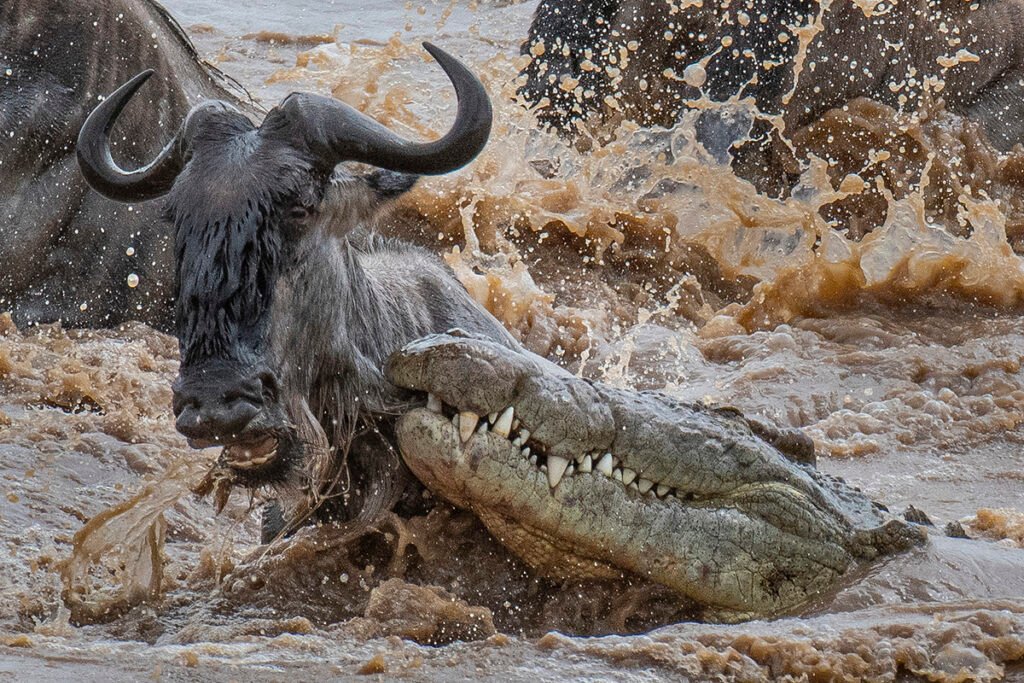
Thousands of wildebeest and zebra may surge towards the water, creating a dramatic scene of movement, dust, and noise. The animals must navigate steep riverbanks, strong currents, and deep water while Nile crocodiles wait in the river.
Some animals hesitate and retreat, while others continue forward. The result is one of the most unpredictable wildlife encounters in Tanzania.
This is not a staged wildlife spectacle. It is a genuine survival event shaped by instinct, environmental conditions, and the behaviour of the herd.
When Does the Mara River Crossing Happen?
The timing of the Mara River crossing varies each year depending on rainfall, river conditions, and the movement of the migrating herds.
Crossings generally occur during the northern Serengeti migration period, often between July and October. However, these months should be treated as a broad seasonal guide rather than a guarantee of a crossing on a particular day.
Even when the herds are in the northern Serengeti, they may spend considerable time moving between grazing areas before approaching the river.
Where Should You Stay for the Mara River Crossing?
The northern Serengeti provides the best access to the Mara River from the Tanzanian side.
Choosing accommodation in the right area can reduce unnecessary travel and give you more time to explore the migration zone. Mobile camps can be particularly useful because their seasonal positioning allows travellers to stay close to changing wildlife movements.
However, the ideal location depends on the timing and movement of the herds during your specific travel period.
Why the Mara River Crossing Cannot Be Guaranteed
One of the most important things to understand when planning a migration safari is that nature does not operate according to an itinerary.
A herd may gather at the river and remain there for hours or days without crossing. It may also approach the water, retreat, and return later.
Even with excellent guides and the right timing, there is no guarantee that you will witness an actual crossing during your stay.
The Northern Serengeti Beyond the River Crossing
A luxury Tanzania safari should not be built entirely around seeing a Mara River crossing.
The northern Serengeti offers exceptional wildlife viewing beyond the river itself, including resident predators, large herbivores, dramatic landscapes, and other migration activity.
This means your safari can still be highly rewarding even if the herds do not cross while you are there.
How to Plan a Mara River Crossing Safari
The most rewarding approach is to give yourself enough time in the northern Serengeti, work with experienced guides, choose accommodation strategically, and allow nature to determine the moment.
The Mara River crossing is extraordinary precisely because it cannot be controlled.
The goal is not to force nature into an itinerary, but to place yourself in the right environment with enough time and patience to witness whatever unfolds.