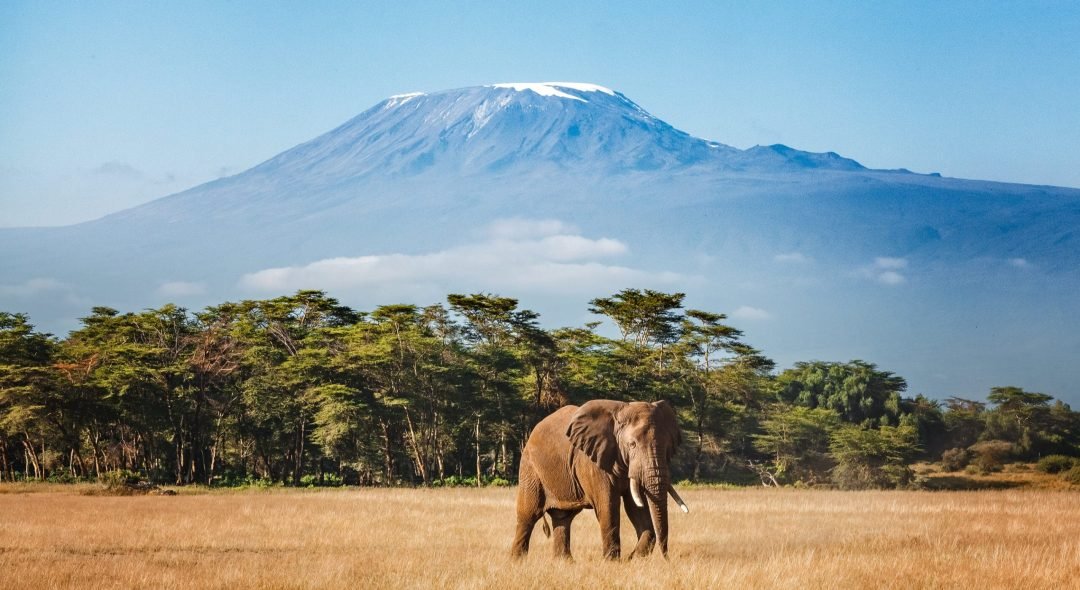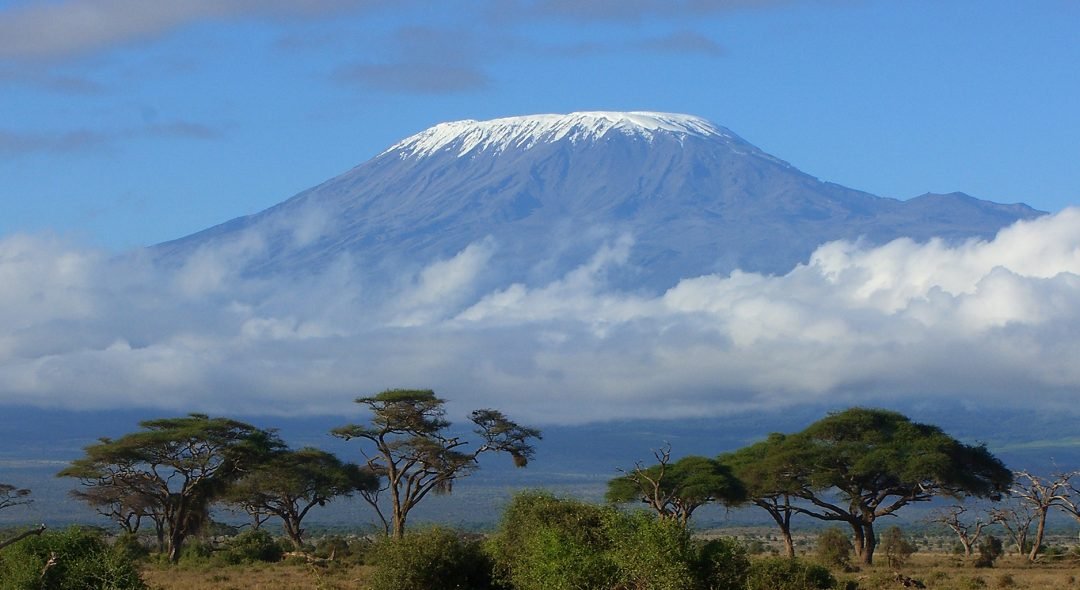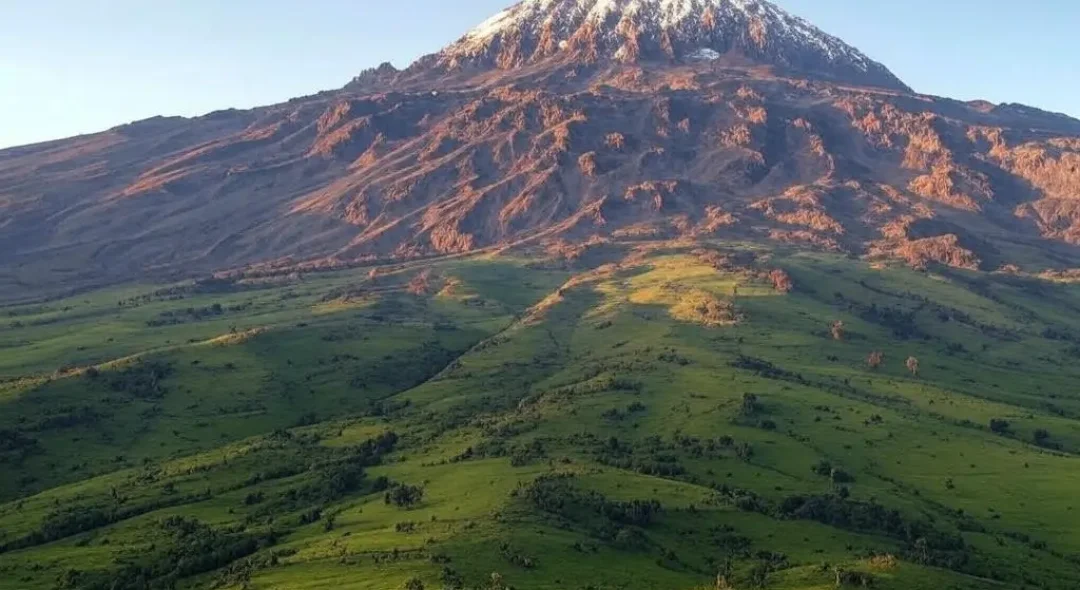
Mount Kilimanjaro rises dramatically above the plains of northern Tanzania, reaching 5,895 metres and standing as Africa’s highest mountain and the world’s highest free-standing mountain. Its immense volcanic form dominates the surrounding landscape, while its summit rises into a world of snow, ice and high-altitude wilderness close to the equator.
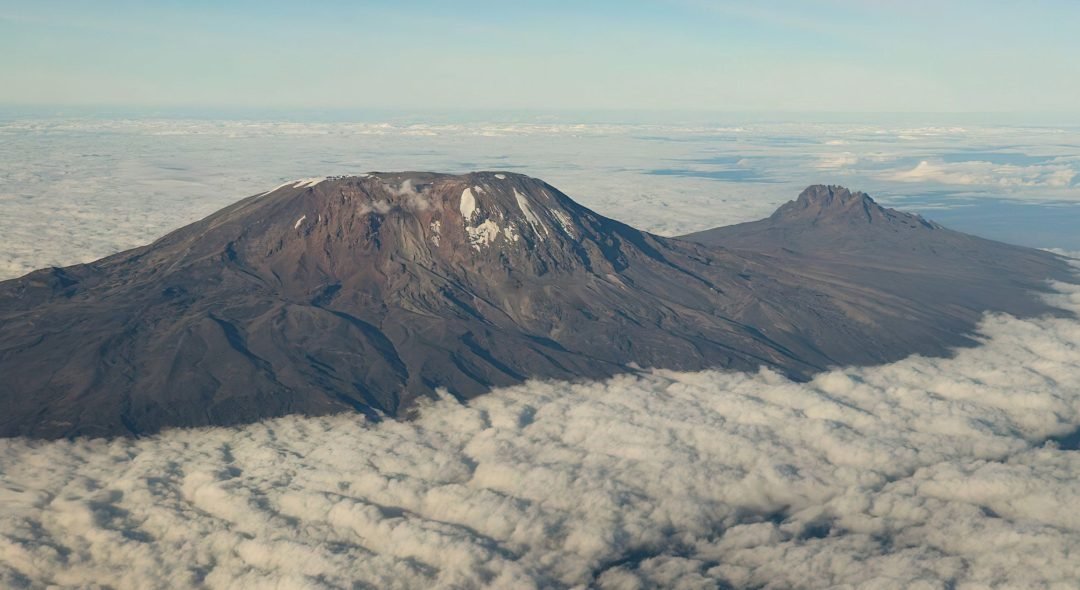
Kilimanjaro is formed by three volcanic cones: Kibo, Mawenzi and Shira. Kibo contains Uhuru Peak, the highest point at 5,895 metres, while the rugged Mawenzi rises to 5,149 metres and the ancient Shira reaches 3,962 metres. Together they create one of Africa’s most recognisable mountain landscapes.
Climbing Kilimanjaro is a journey through dramatically changing ecological zones. The lower slopes lead through cultivated landscapes and montane forest before giving way to heath and moorland, alpine desert and finally the cold summit environment of Kibo. Giant lobelias, senecios, volcanic terrain and increasingly sparse vegetation illustrate the extraordinary changes that occur with altitude.
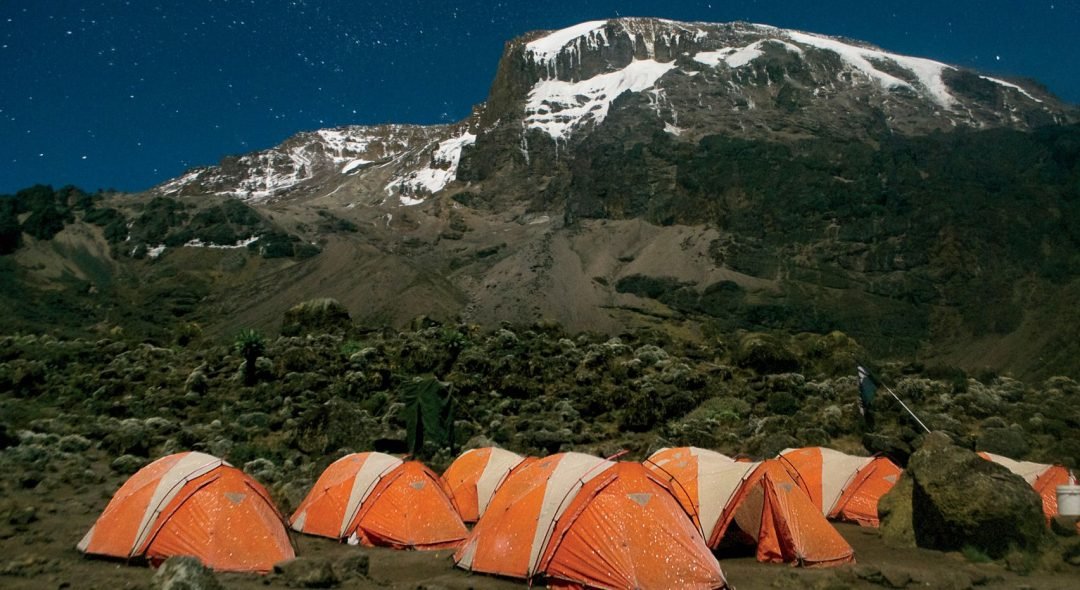
Several routes provide access toward the summit, each offering a different combination of scenery, terrain and trekking experience. Marangu approaches the mountain through forest and uses mountain huts, while Machame, Lemosho, Rongai and other routes use designated mountain camps. Summit itineraries generally take several days, allowing trekkers to ascend gradually and adapt to the changing altitude.
The mountain is also a destination beyond the summit climb. Visitors can explore the montane forest, enjoy nature walks, experience the Shira Plateau, undertake mountain cycling on designated routes and discover the different habitats surrounding the volcanic massif.
Wildlife is most visible in the lower forest zones, where black-and-white colobus monkeys, blue monkeys, bushbuck, duiker and buffalo can occur. More than 179 bird species have been recorded in the park, while higher elevations support specialised alpine species adapted to the mountain environment.
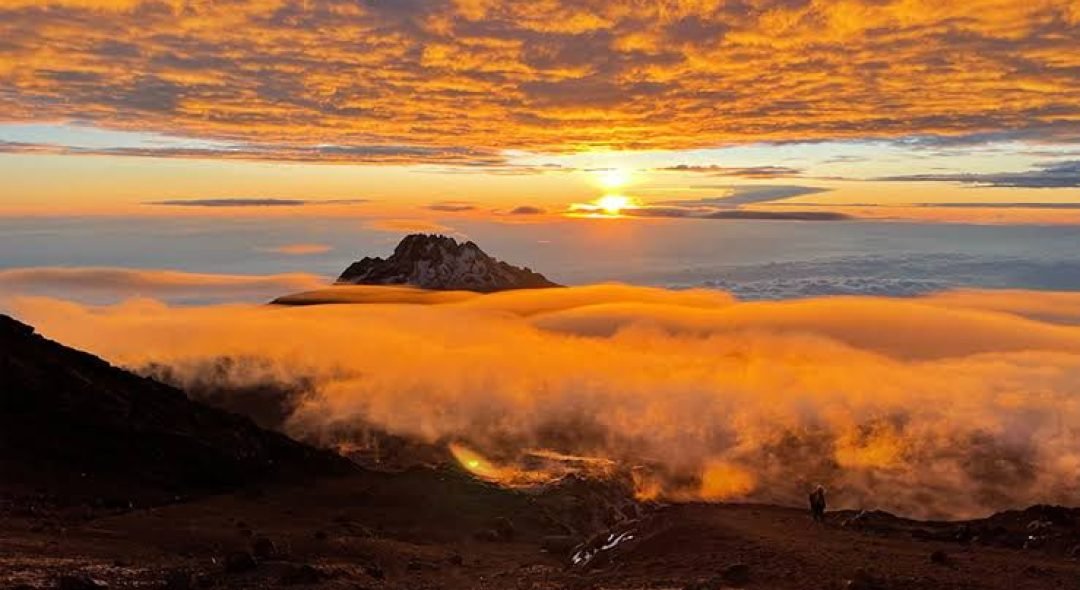
Reaching Uhuru Peak is ultimately only one part of the Kilimanjaro experience. The changing landscapes, volcanic history, mountain communities, sunrise above the clouds and extraordinary transition from tropical forest to alpine summit make the journey itself the defining experience.